

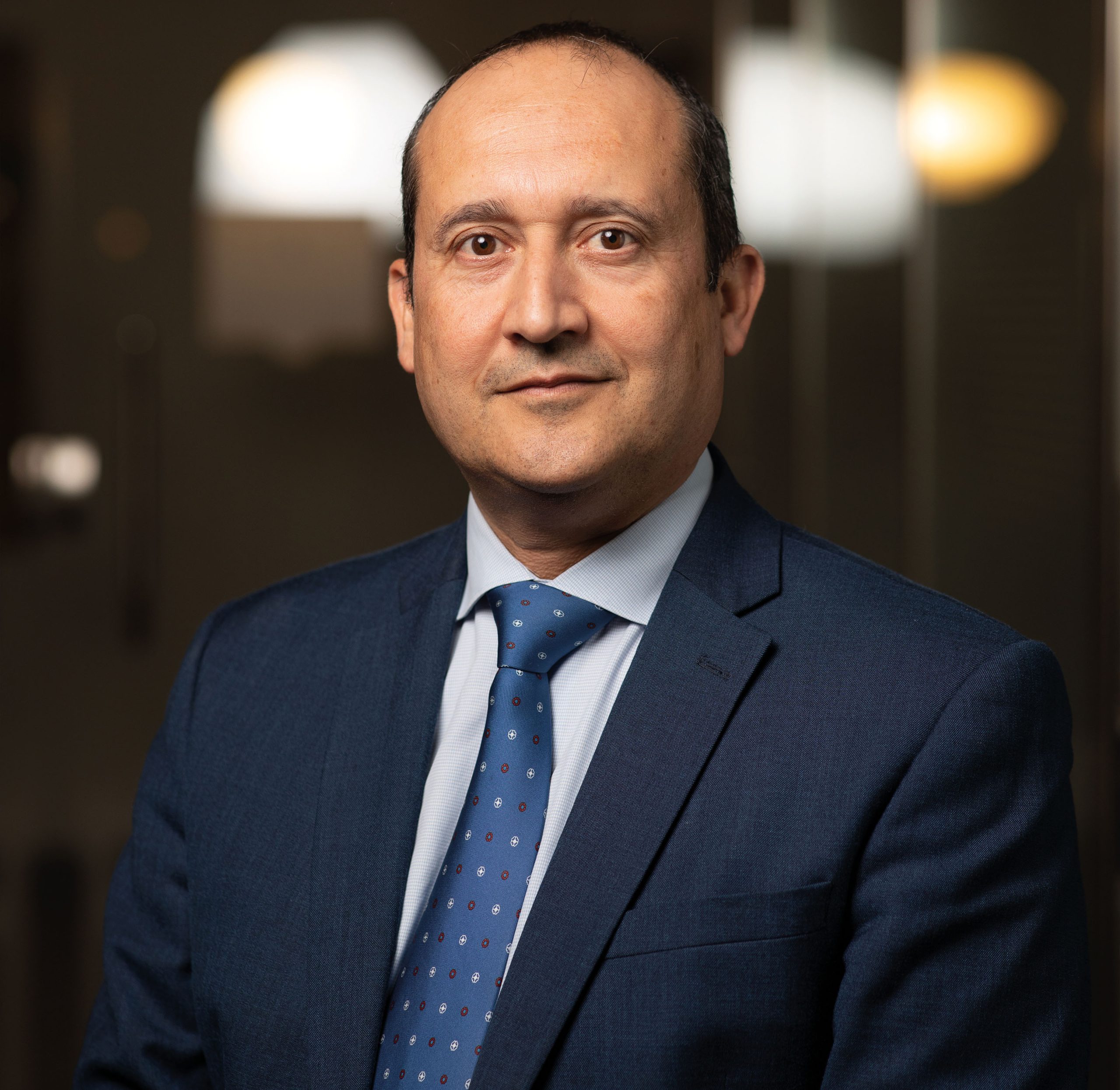
If there is one person who can trace the development of the Valletta Cruise Port, that is its CEO Mr Stephen Xuereb. He joined the company as its first CFO in 2002 when, from concept, the vision solidified into fact. “I joined during the development stage of this project, soon after it was privatised by the Government of Malta,” recalled Mr Xuereb. Originally a consortium of the ‘big names’ in Maltese industry, such as the Demajo Group, Angelo Xuereb who had started the consortium, Farsons, Salvo Grima, Bank of Valletta and the Malta International Airport among others, “It was a group with a vision to develop the cruise industry in Malta as well as transforming this derelict side of the Grand Harbour, which at the time was in a state of complete abandonment,” said Mr Xuereb.
RESTORING AN ARCHITECTURAL JEWEL
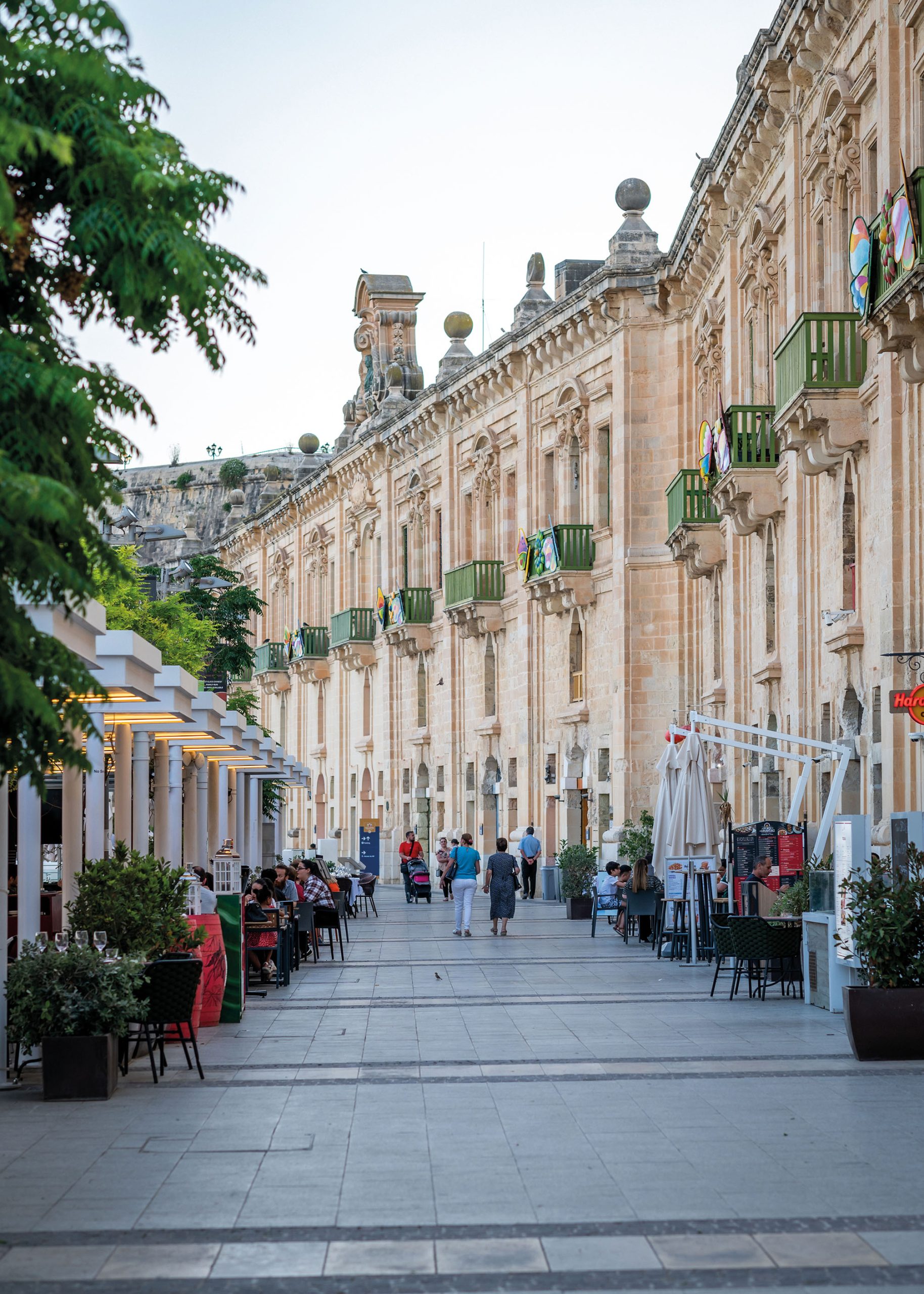
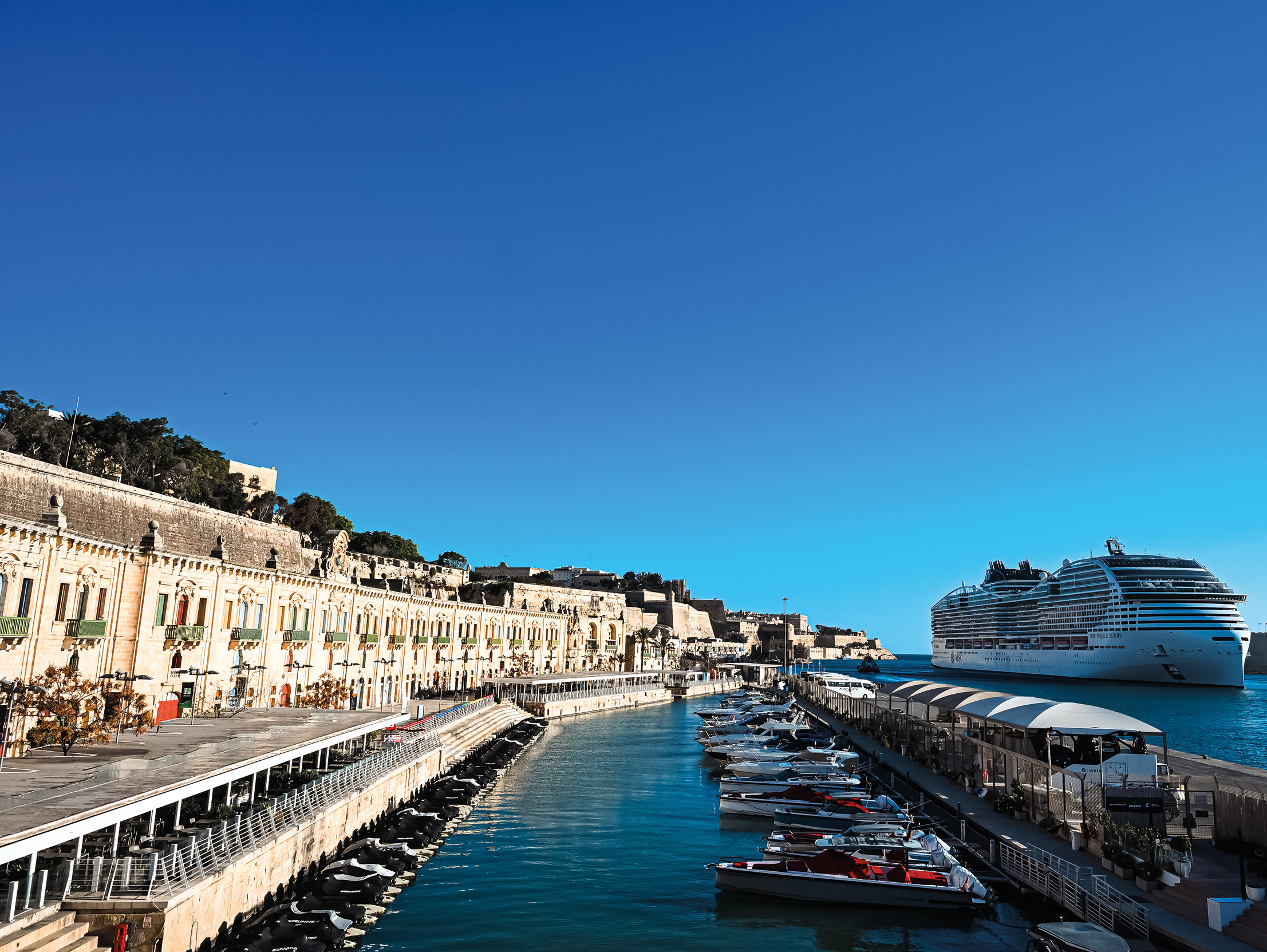
Indeed, it is hard to recollect just how dilapidated the site was at the time the concept started taking shape, and the credit due that goes to the visionaries who saw this possibility. The iconic buildings of the Valletta Waterfront, located in Valletta’s majestic Grand Harbour, were built in 1752 by Grandmaster Emanuel Pinto da Fonseca and designed by Andrea Belli. The 19 spacious warehouses, still known as ‘Pinto Stores’, were built to further boost harbour activities, and to be used as stores by the Knights of Malta and other merchants.
Adjacent to the Pinto Stores are the Forni Stores, which are even older, built in 1626 and 1720 respectively. Although the Forni Stores were originally constructed to provide storage facilities, they were converted by the British Navy in 1810 into a bakery – this was the first naval bakery that furnished the growing navy with ship biscuits. These were extensively restored since not only were they in a very shabby state, but also, some were structurally defective as a result of enemy action in World War II.
The iconic buildings of the Valletta Waterfront, located in Valletta’s majestic Grand Harbour, were built in 1752 by Grandmaster Emanuel Pinto da Fonseca and designed by Andrea Belli
Their historic beauty is now a true pleasure to gaze upon; the multi-hued apertures provide a sense of lightness and happiness – surely an optimal first impression for any cruise passenger.
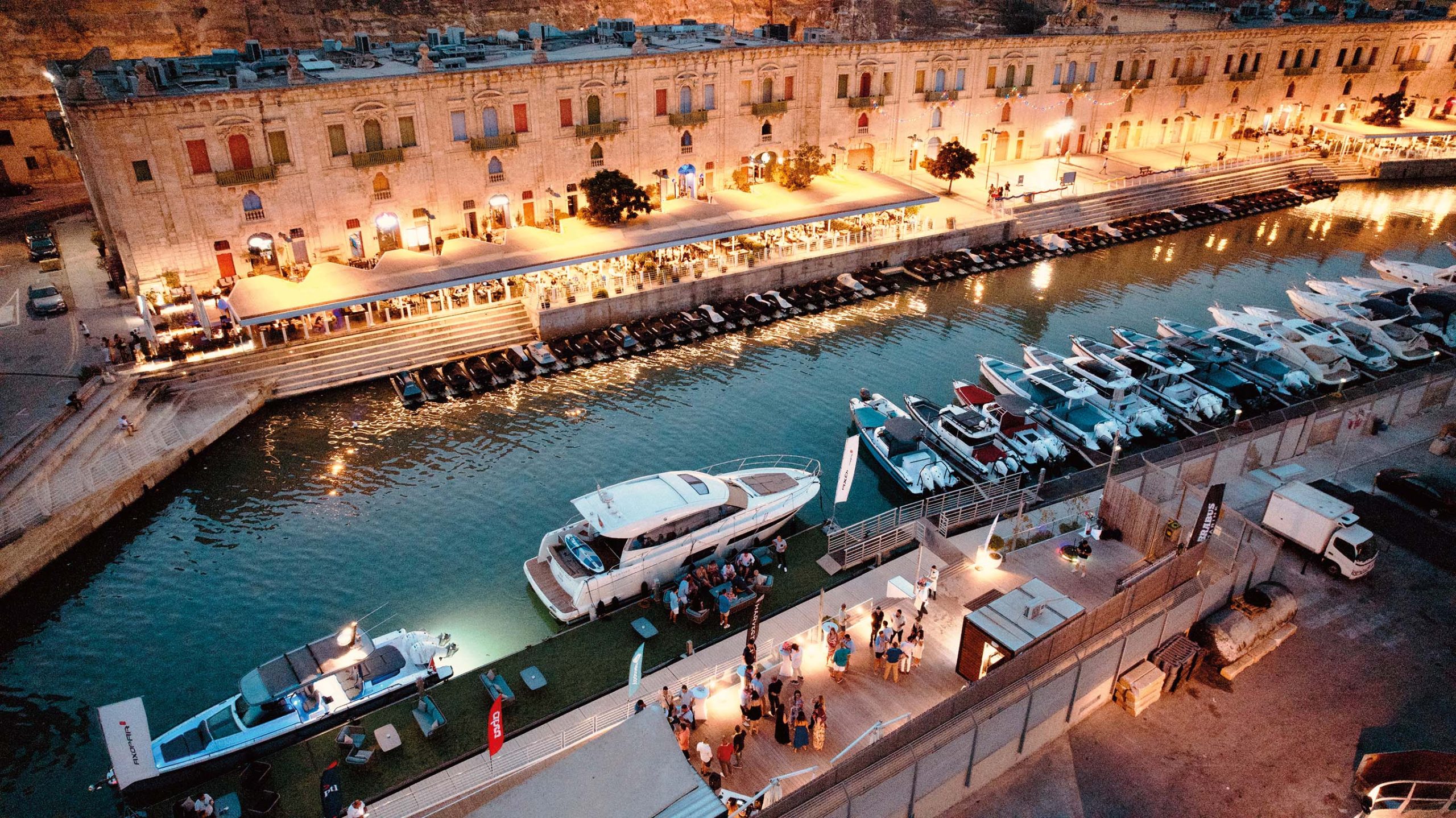
“We had this vision of transforming this row of beautiful buildings into a destination in its own right, as well as of obviously further complementing the needs of the cruise sector. I think we succeeded in both respects,” said Mr Xuereb.
In 2005, three years after the construction and restoration works started, work was inaugurated into the Valletta Waterfront brand. This distinctive brand is indeed a destination in its own right, housing restaurants as well as a number of retail outlets and offices.
CLOSE TO A MILLION
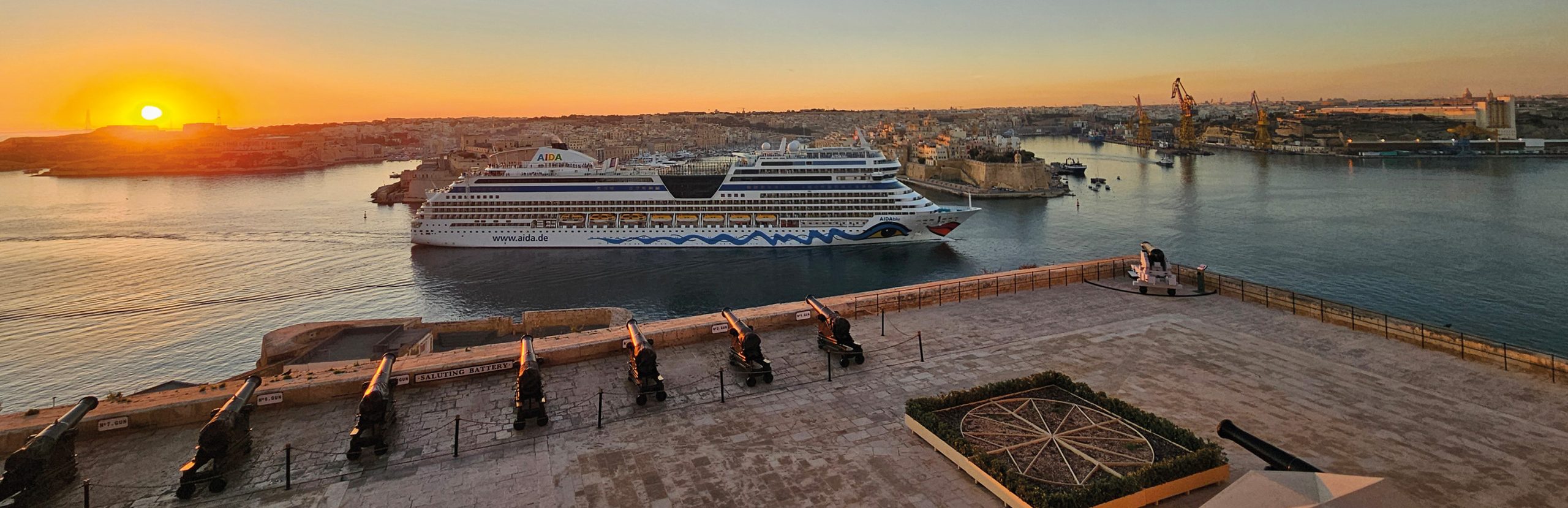
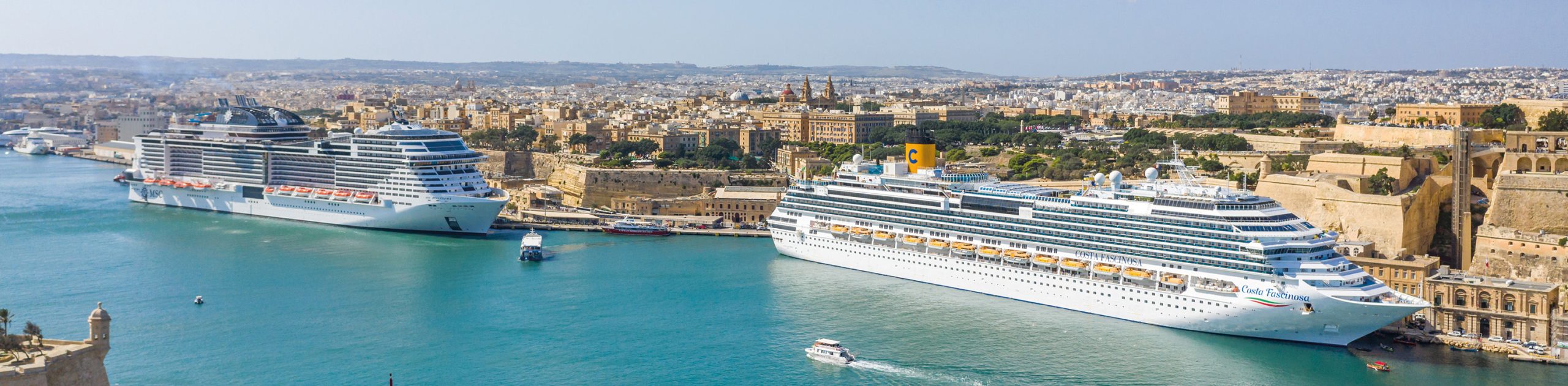
The core business of the Valletta Cruise Port is the cruise liner sector “which we have developed substantially. We took over the operations from the Malta Maritime Authority at the time when traffic was hovering around the 250,000 passengers in 2002. Now we are close to 1,000,000 passengers,” observed Mr Xuereb. As CEO of the company, Mr Xuereb said that he could attribute this increase to a number of factors. “The cruise industry is a supply-driven economy, so the more ships they build, the more the industry continues to grow. Indeed, this is a growth industry since, globally, the cruise tourism market is minute when compared to the overall global tourism market,” explained Mr Xuereb.
if we lose business in one area, we gain it in another and clinical observations for future prospects are optimistic
Currently the global cruise capacity is of some 33 million passengers and it is set to grow to around 45 million passengers within the next 5 years as new ships are being built. “Malta benefited from its strategic position in the Mediterranean and has a number of advantages such as our proximity to other cruise destinations. We therefore fit well into cruise itineraries in the Mediterranean,” added Mr Xuereb. Here, the geopolitical situations have, and will always, play a part.
Mr Xuereb observed that due to the current instability in the Middle East, there was a decline in cruises going to the Eastern Mediterranean and Malta thus saw its location being leveraged and experienced an influx of cruise liners stopping in the central Mediterranean. “So if we lose business in one area, we gain it in another and clinical observations for future prospects are optimistic,” observed Mr Xuereb, “The target is one million and we shall surpass it soon.”
A DESTINATION FOR ALL TASTES
Obviously, the strategic location was also enhanced by a very good networking system which the Valletta Cruise Ports worked on and has built on over the years.
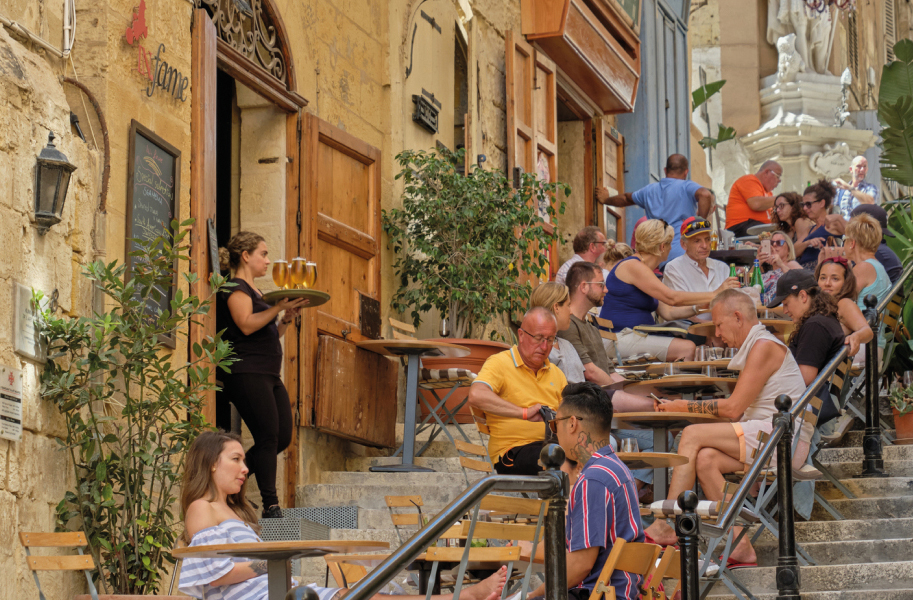
This meant that the numbers of tourists not only flowed in but also that the experience was positive. “As a cruise port we are at the base of the capital, Valletta. This means that many of the passengers opt to leave the ship and visit the capital. They feel safe to do so. We also offer a number of excursion options such as Mdina, Rabat, Mosta, Megalithic temples etc. Then there are those who prefer a day at the beach…we do not always realise that many do not normally have access to beaches and would absolutely love a day at the sea,” smiled Mr Xuereb.
He added that the cruise liner passengers are as varied as the lines which bring them to Malta: “they range from those brands which pay tribute to mass markets, and rise steadily up the ranks to their more elite and luxury counterparts. We incessantly strive to delight all our visitors,” he assured.
we are just a front-end to the far bigger product called Destination Malta
This success, while reliant on various market factors, has had an additional plus point. “We also benefited from huge support from all stakeholders, whether it is the government, the authorities, the agents, the service providers, these always understood what we were after and either shared or followed our vision. We managed to educate a number of service providers into a more client-oriented approach. This obviously took time, patience and dialogue and the services were thus improved. This was crucial to us since we are just a front-end to the far bigger product called Destination Malta,” observed Mr Xuereb. Indeed, he added, one can have a five-star service within the company but if that is not replicated in the holistic destination experience, then this would be “rather useless”.
You feel the vibe in Valletta during the day when there is a cruise ship in the harbour
“The stakeholder engagement and involvement are all part of the success of the cruise industry in Malta,” emphasised Mr Xuereb. “This is very important since through a cruise liner experience, passengers are given a taster of what the country has to offer, making it more likely that they would visit as longer-stay tourists in the future.”
A LUCRATIVE VIBE
Fair enough, the business-minded may say, but is this worth our while.. do they leave enough cash in the coffers? The Valletta Cruise port has two main revenue streams: the ‘seaside’ and the ‘landside’ as described by Mr Xuereb. The maritime aspect relates to the berthing of cruise vessels, fees, landing charges etc. The landward side relates to the revenue from rentals on the Valletta Waterfront. “We commission independent studies every two years to see what our contribution to the Maltese economy is. The latest one shows that it is around the very satisfactory €90 million mark,” observed Mr Xuereb.
Such a contribution leaves an impact, best observed perhaps, in its absence. Mr Xuereb recalled the dark days of the Covid pandemic when he was often accosted by the Valletta shopkeepers who lamented the lack of cruise liner passengers. “You feel the vibe in Valletta during the day when there is a cruise ship in the harbour,” said Mr Xuereb. The financial injection into the economy ranges from the typical mass-market effect to the more luxury-oriented economy.
EMPHASIS ON SUSTAINABILITY TO ENSURE THE FUTURE
One final piece of good news: Mr Xuereb observed with satisfaction the recent acquisition of a permit to develop the vacant plot in the middle of the waterfront as a four-storey car park behind the current façade. This plot is vacant due to enemy action in World War II and is currently used as a street-level car park. This is also part of the consolidation of assets and risk management to ensure the financial stability of the company.
“This is an industry which needs to grow in a sustainable manner. I have seen what happened in other countries. Who would have thought that Venice would be practically written out of the cruise itinerary after a strong anti-cruise sentiment? We have to be careful that we are sustainable, managing the influx of people responsibly and wisely so that the enterprise remains successful and the experience gratifying. To do this we are also using technology to assist the passengers in skipping queues and managing their time. We cannot afford to flood the main attractions,” said Mr Xuereb.
In 2016, the Valletta Cruise Port decided to venture forth into a partnership with a larger group, Global Port Holdings. Global Ports Holding Plc is the world’s largest cruise port operator with an established presence in the Caribbean, Mediterranean, Asia-Pacific regions, including extensive commercial port operations in Montenegro. “This was an important inflection point since it gave us a stronger presence internationally, forming part of this bigger group.
As COO of the Global Port Holdings, I was also able to push our destinations – especially Valletta – since these are close to my heart as well as being high-value opportunities,” said Mr Xuereb.
We have several irons in the fire
He added that this work means that he is also constantly travelling to ensure that the standards of the company are met. “Internationally speaking, we are executing our expansion strategy,” explained Mr Xuereb, adding “I just signed an MOU for a port in Malaysia and we should be closing a further two or three ports in the coming weeks. We have several irons in the fire.” The group, he said is growing steadily and their profitability ratings are back to pre-Covid levels. He added that Covid had statistically killed 97% of the world’s cruise revenues “We survived that, we will survive anything,” he exclaimed.