

 Services:
Two Container Terminals, Distripark Facilities
Profile:
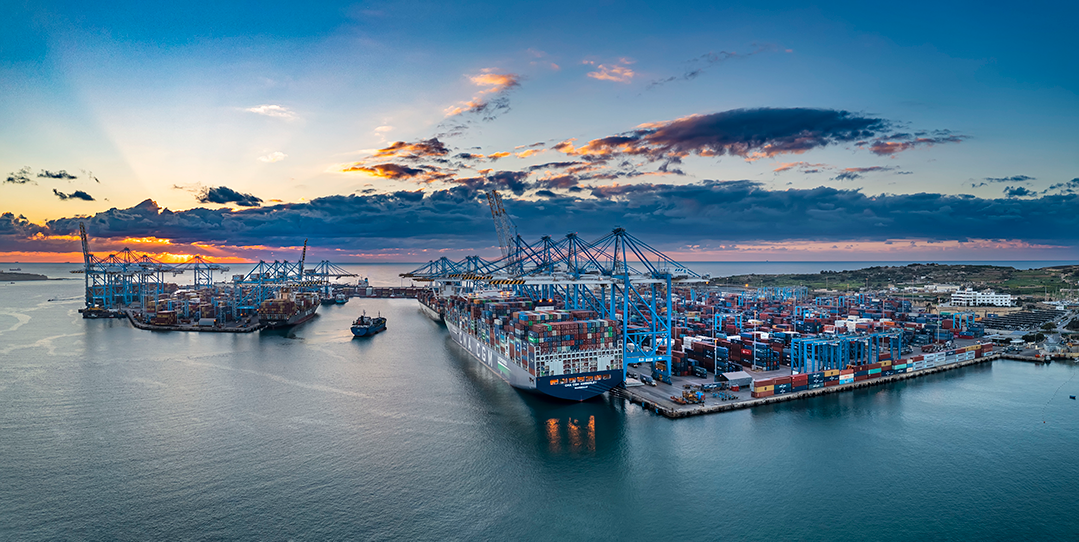
Malta Freeport Terminals is one of the Mediterranean’s principal transhipment hubs, strategically located at the centre of the region’s maritime crossroads, serving as a key interface between global mainline shipping services and regional feeder networks. Handling close to three million TEUs per year, the terminal provides regular connections to more than 110 ports worldwide, including 55 within the Mediterranean, facilitating the safe and efficient redistribution of cargo across Europe, North Africa, and the wider region.
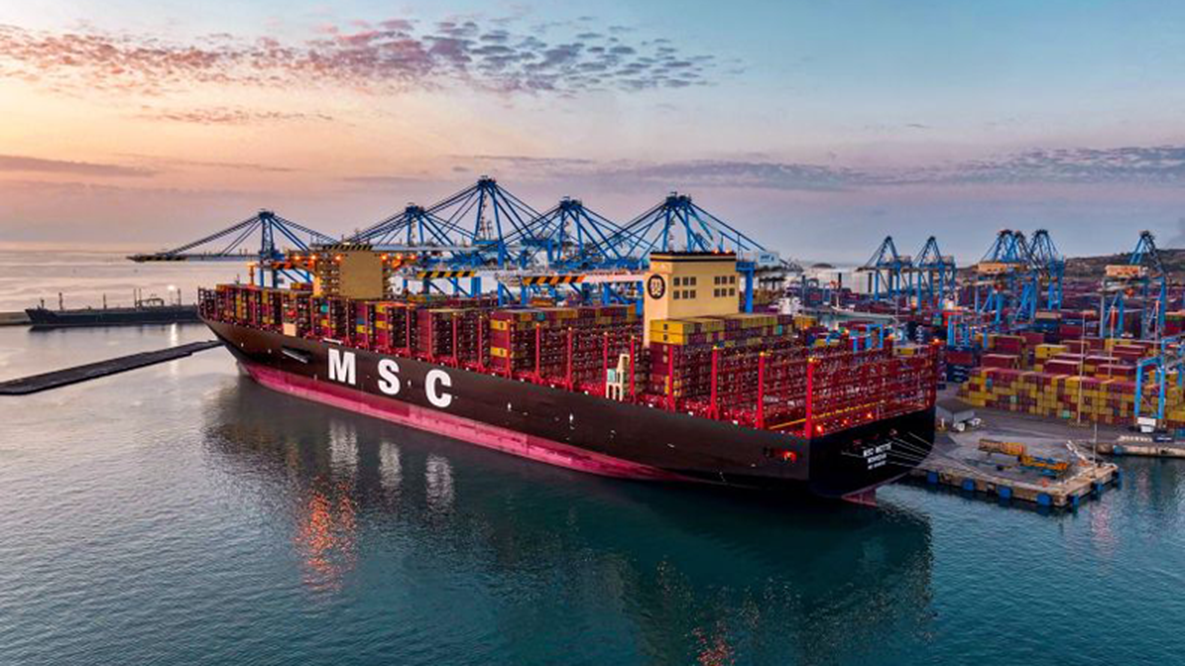
Malta Freeport Terminals’ capability to manage high volumes is supported by advanced, large-scale infrastructure designed to handle the world’s largest container vessels. With 2.46 kilometres of deep-water quay dredged to 17 metres, the facility can accommodate ultra-large container ships exceeding 24,000 TEUs. Meanwhile, the terminal facilities include 771,000 square metres of container storage, an operational yard capacity of 45,000 TEUs, and 2,632 reefer points for temperature-controlled cargo, ensuring comprehensive support for diverse customer requirements.
Substantial capital investment has been a key feature of Malta Freeport Terminals’ development since its privatisation in 2004. More than €400 million has been invested in quay extensions, land reclamation, equipment modernisation, and digital systems, enabling the terminal to adapt to changing vessel sizes and increasingly complex service patterns.
A major milestone in this long-term programme is the €56 million Terminal Two expansion, representing the most significant enlargement of the facility in almost two decades. This project will square-off the terminal, extend the quay lengths, optimises berth configuration, and supports simultaneous operations of next-generation ultra-large vessels.
In parallel, Malta Freeport Terminals has invested in megamax ship-to-shore cranes capable of serving ships over 400 metres long and more than 24 container rows wide and will continue
to enhance productivity and increase annual handling capacity from approximately 3.6 million TEUs to four million TEUs.
Environmental performance is an integral component of the Freeport’s operational strategy driven by a clearly defined decarbonisation roadmap. The introduction of electrically powered equipment is lowering emissions and reducing noise levels, while new crane technology is designed to cut carbon output by up to 50%.
These efforts are reinforced by advanced digital tools and optimised terminal operating systems, aligning operational efficiency with evolving regulatory requirements. Digitalisation continues to enhance the terminal’s resilience and efficiency. Advanced terminal operating platforms, automated gate systems, and AI-driven applications, including Digital Twin technology, support improved
planning, supervision, and safety management, increasing operational transparency and control.
Personnel development is another strategic pillar. Malta Freeport Terminals delivers continuous training across all levels of its workforce and has recently expanded this capability with the introduction of a Full Mission Crane Simulator, developed in collaboration with GlobalSim Inc. Replicating live quay and yard conditions, the simulator provides realistic, risk-free training for Ship-to-Shore and Rubber-Tyred Gantry crane operators, strengthening safety, decision-making, and operational consistency.
As a result of exponential growth over the past two decades, the terminal today contributes an estimated €170 million, around two per cent of Malta’s GDP, to the Maltese economy.
Malta Freeport Terminals is jointly owned by Terminal Link, made up of CMA CGM (51%) and China Merchants Port Holdings Company Limited (49%), and Yilport Holding Inc. Both shareholders are well established in the shipping industry and provide a strong platform for continued growth.
With expanded infrastructure, advanced equipment, a skilled workforce and a clear focus on sustainability and digital innovation, Malta Freeport Terminals is positioned as an innovative, future-ready logistics hub supporting Mediterranean and global trade flows.
Opening Hours
Monday:
Open 24 hours
Tuesday:
Open 24 hours
Wednesday:
Open 24 hours
Closed
Thursday:
Open 24 hours
Friday:
Open 24 hours
Saturday:
Open 24 hours
Sunday:
Open 24 hours