

After completing her law education, Dr Fenech moved with her husband to London, the hub of the global shipping industry. She joined Holman Fenwick and Willan (HFW), where she received maritime legal training from world authorities on the subject until 1991. She then expanded her expertise in New Orleans, one of the USA’s most dynamic port cities. Upon her return to Malta, which had evolved significantly since she left in 1986, Dr Fenech became one of the country’s pioneering maritime lawyers.
She played a crucial role in establishing maritime legal departments within Fenech & Fenech. “I never looked back after setting up the marine litigation department here in 1993. Not only did it take off, but we also soon became the only firm on the island to have four separate departments catering for the maritime sector which was previously unheard of: ship registration, ship finance, marine litigation and yachting.,” she explained. There was already a strong ship registration department at Fenech & Fenech when she joined.
The amendments to the Merchant Shipping Act in the late ‘80s brought international attention to Malta, resulting in a surge of ships registered under its flag. Dr Fenech leveraged her expertise to strengthen Malta’s presence in the international maritime arena and was elected President of the Malta Maritime Law Association in 2008, serving for about 12 years.
Dr Fenech’s career then took a further significant upturn with her involvement in the Comité Maritime International (CMI) becoming Vice President in 2018. As the first Maltese to hold such a position, her work with CMI indirectly elevated Malta’s global maritime standing.
Having then been elected as its President in 2022, she has continued to encourage Malta’s prominent role in drafting international maritime laws, thus reinforcing the country’s position in global maritime affairs. “Malta is more than just a flag. Our maritime industry truly consists of all things maritime, pilotage, towage, salvage operations, ship repair, ship agency, cruise line operations, yachting, transhipment, petroleum handling, bunkering, maritime legal support, and associated corporate services, all under a stable and robust legal framework,” she proudly stated. “Every conceivable maritime activity is represented here, and numerous international maritime activities touch Malta at some point.”
Every conceivable maritime activity is represented here, and numerous international activities touch Malta at some point
Founded in 1897, the CMI drafts and proposes international maritime conventions, ensuring standardised maritime laws across countries. The very raison d’être of the CMI is the unification of international maritime law.
Dr Fenech highlighted CMI’s collaboration with the Belgian government at its inception in shaping international maritime legislation before the establishment of the United Nations (UN) and the International Maritime Organization (IMO). “The role of the CMI has always been to identify areas of maritime law which could benefit from unification through an international convention.
Ships of their very nature traverse the oceans and in any given situation it is possible for several different laws to apply. Thus, it is crucial for stability and certainty in international trade; 90% of which is carried by sea, to have as much unification as possible. “CMI seeks to address practical maritime challenges like arrest of ships, carriage of goods by sea, carriage of passengers, salvage, collisions, limitation of liability, the effects of judicial sales of ships and several other issues ensuring uniformity thus assisting international maritime operations,” Dr Fenech explained. The latest CMI project is the Convention on the International Effects of Judicial Sales of Ships.
This is a convention which ensures that when a vessel is sold in a judicial sale in country A, it is not rearrested by the vessel’s previous creditors in other countries.
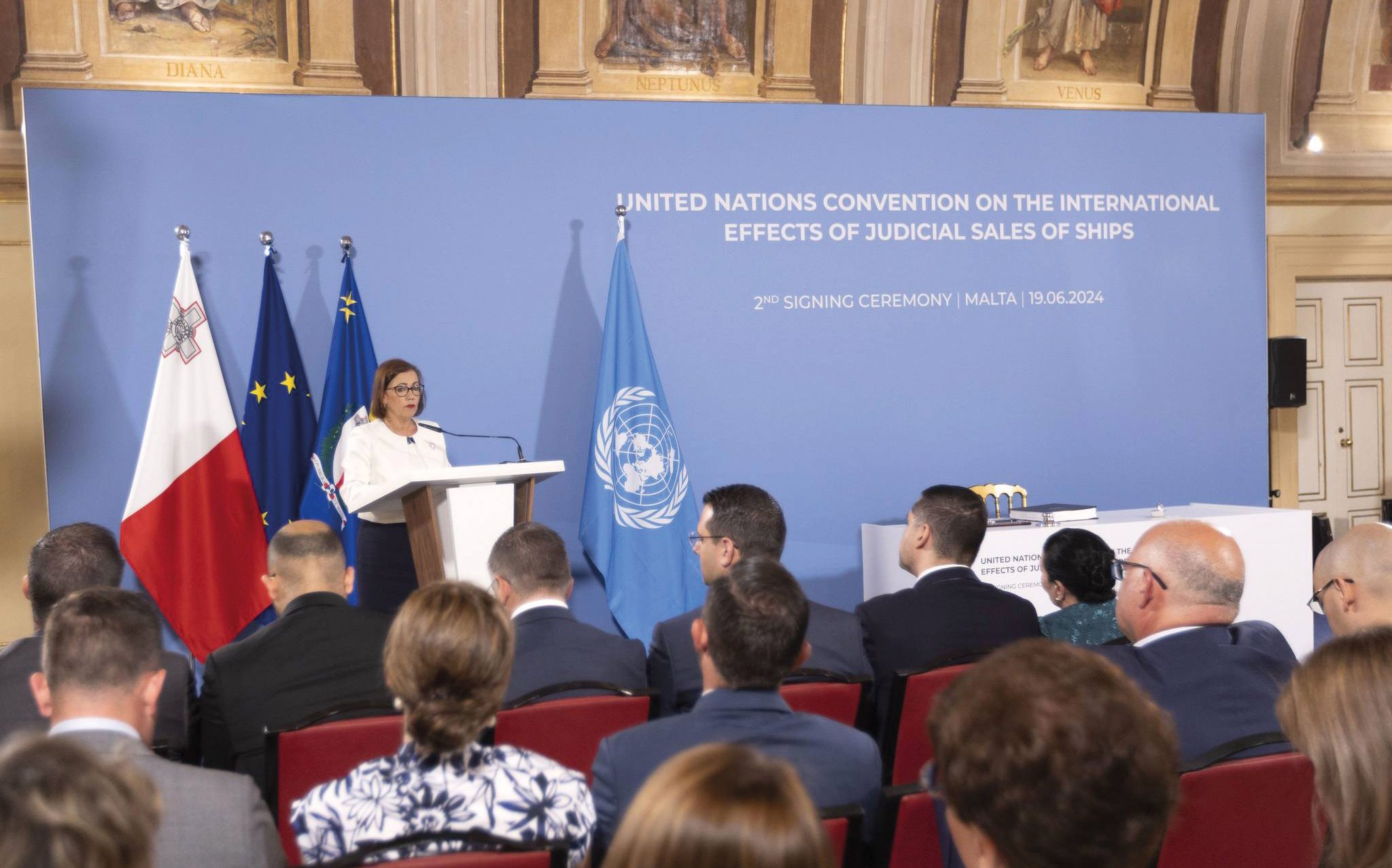
Dr Fenech was the CMI co-ordinator for the project at UNCITRAL. The Convention was signed in Beijing in 2023, however on the 19th of June, 2024, a second signing ceremony was held in Malta co-hosted by the Ministry of Foreign Affairs, UNCITRAL and the CMI.
The Treaty book was exceptionally flown from New York to Malta and an additional 7 countries signed the convention. The convention has now been signed by 34 countries.
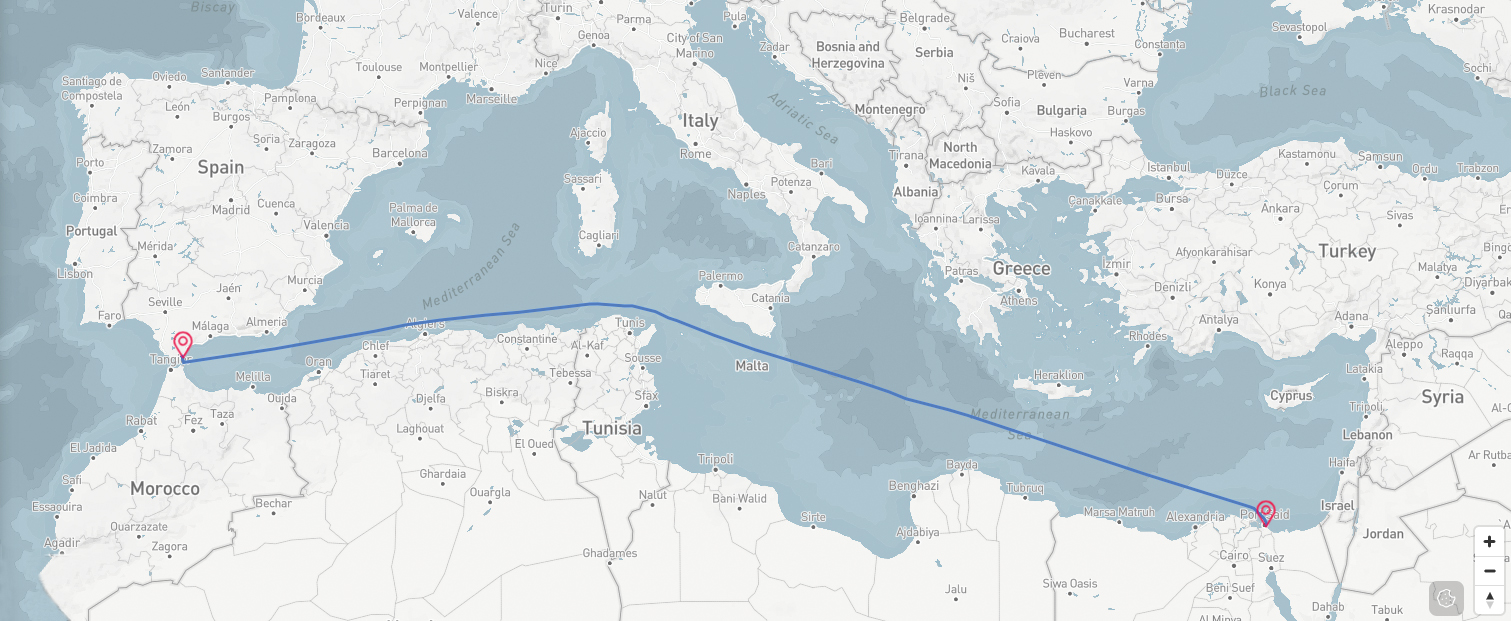
Malta’s strategic geographic location has significantly contributed to its global maritime importance. “Being centrally located between Suez and Gibraltar has made Malta a world hub for maritime activity. However, we needed to develop and we need to continue to develop the skills and expertise to capitalise on this geographic advantage, we must continue to be competitive, to offer good value for money – nobody owes us a living” she noted.
The increased registration of ships under the Maltese flag has heightened Malta’s involvement in marine litigation world wide. “In a number of jurisdictions the law of the flag may govern the issues being heard by the foreign court like in collisions, crew matters, carriage of goods, salvage, pollution, and bankruptcy of ship-owning entities. And having more ships under the Maltese flag means that Maltese law has become a growing reference point in maritime incidents,” she explained.
And having more ships under the Maltese flag means that Maltese law has become a growing reference point in maritime incidents
This has created substantial work for marine litigation specialists and maritime service providers.
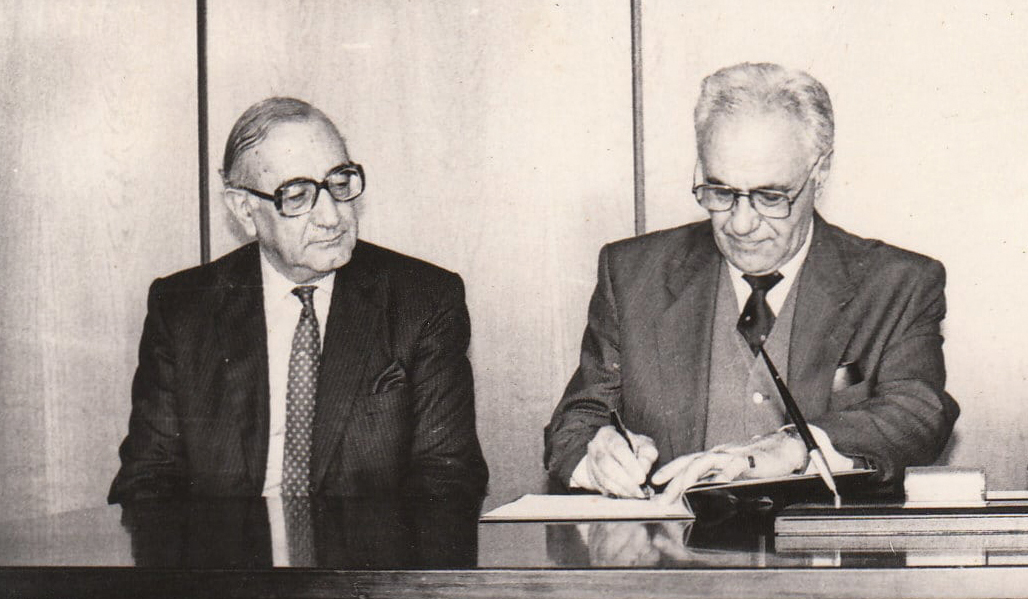
Dr Fenech emphasised the economic significance of maritime law in Malta’s development. The maritime sector was the first to attract international investment in the late 1980’s, a model later adopted by other sectors like finance and gaming. This began with the 1988 amendment to the Merchant Shipping Act, led by Dr Joe Fenech, then Parliamentary Secretary for Maritime Affairs, transforming Malta into a leading maritime jurisdiction.
Fenech & Fenech Advocates have always been at the forefront in contributing to the development of Maltese legislation, with Dr Ann Fenech involved in numerous amendments to the Merchant Shipping Act, the Pilotage Regulations, as well as Section 742 of the Code of Organisation and Civil Procedure, modernising the jurisdictional framework for maritime cases in Malta.
The Pilotage services also saw major progress in its regulatory development. Before 2001, the roles of sea pilots and mooring men were poorly defined. New regulations recognised pilots as highly experienced professionals, elevating their status and professional standards enabling them to go forward to develop and offer the state of the art services which they offer today.

The relationship between Malta’s maritime service providers and authorities has been crucial to the sector’s success. The Malta Maritime Forum, of which Dr Fenech was a co-founder together with Mr. Godwin Xerri and Mr. Joseph Bugeja, provides a platform for interaction, ensuring that the expertise and needs of service providers are considered in policy-making.
Despite Malta’s success, new international regulations, such as the EU’s Emissions Trading Scheme (ETS), pose some very serious challenges without reaching the very objective of the Scheme which is to reduce carbon emissions. She explains that regrettably all ships have to do to avoid the EU ETS when entering EU waters such as Maltese territorial waters is to deviate to the north coast of Africa.
The maritime sector was the first to attract international investment in the late 1980’s, a model later adopted by other sectors like finance and gaming
The end result is increase costs for shipping companies, affecting Malta’s role as a transhipment hub which in turn lead to traffic being deviated via North Africa actually increasing the carbon footprint. Dr Fenech stresses the fact that all of this may have an impact on Malta’s competitive edge.
Dr Fenech’s contributions underscore the connection between a robust maritime legal infrastructure and a thriving maritime industry. Her efforts have assisted in establishing Malta as a strategic maritime hub, supported by extensive local expertise and resources. “We must continue excelling in our maritime roles and services while adapting to emerging challenges to maintain our leading position,” she concluded.